
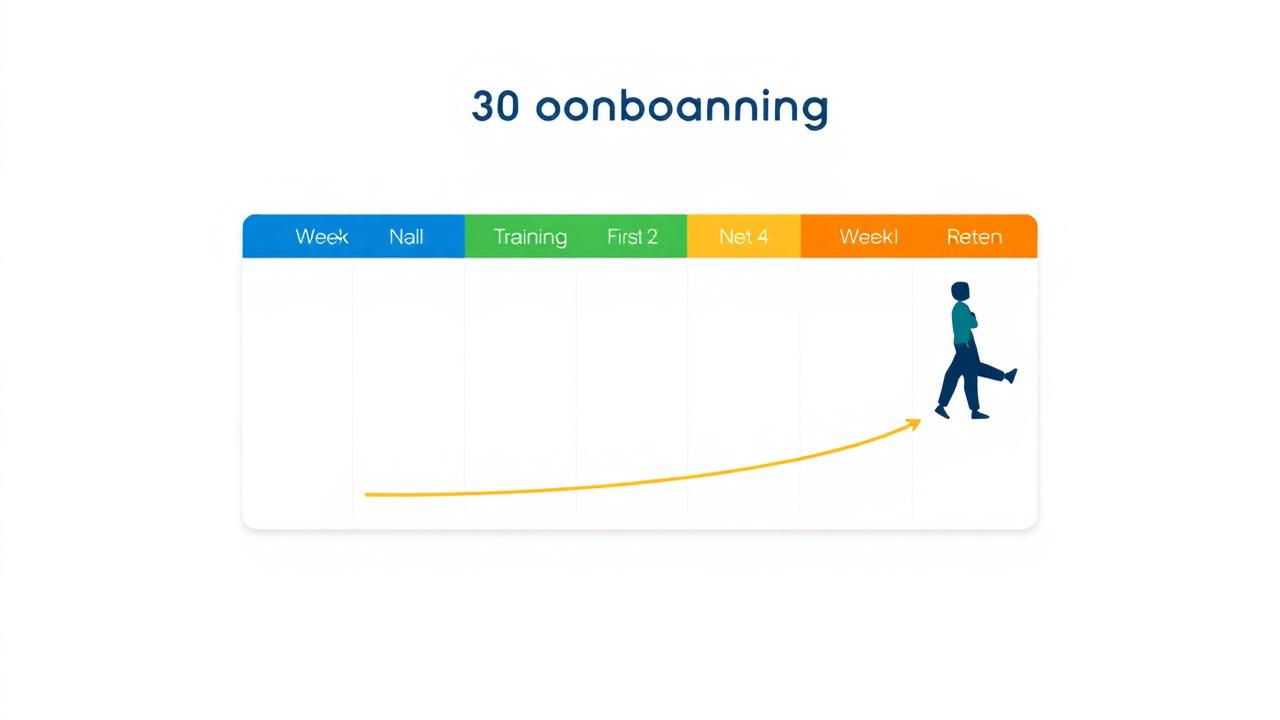
Insurance agent turnover is high across the industry, and most of it happens in the first 90 days. The agents who leave in this window are not usually the ones who could not have succeeded — they are the ones who were set up to fail by an onboarding process that either gave them too little structure or too much to absorb at once. The 30-day onboarding framework below is built around one principle: structure the early weeks so the new agent has small wins quickly and builds confidence before they face the volume of rejection that comes with sustained outbound work.
Week 1: Systems and Compliance
New agents should not be dialing in Week 1. They should be learning the systems and the compliance requirements. An agent who dials before understanding TCPA basics is a liability, not a revenue contributor.
- Day 1-2: CRM setup and navigation — the 12 lead record fields, the 6-stage pipeline, how to log call outcomes and schedule next attempts
- Day 3: Compliance fundamentals — TCPA basics, time zone enforcement, the 8 AM to 9 PM calling window, what a DNC request means
- Day 4: List verification — run a sample list through Clean Leads 365, understand what active status, DNC flag, line type, and litigator flag mean
- Day 5: Listen to recorded calls — a minimum of 10 live agent calls covering the full conversation framework
Week 2: Controlled Live Calling with Supervision
Week 2 begins live calling with a supervisor available for real-time feedback. The new agent should call 50-75 records per day — less than full production volume, enough to generate 15-25 live conversations for learning purposes.
- Daily debrief: 15 minutes reviewing 2-3 calls — what worked, what to adjust, one specific change for tomorrow
- Objection library: After each live call, log any objection encountered and how it was handled
- Metrics start: Contact rate, quote rate, and attempt count tracked from day one of live calling
Week 3: Full Sequence Volume
Week 3 moves to full production volume — 150-180 dials per day — with the supervisor stepping back from real-time monitoring to weekly review. The Week 3 milestone is the first policy written. For most agents with reasonable list quality and the Week 1-2 foundation in place, this happens in Week 3. The first close is a confidence anchor that changes how the agent approaches subsequent calls.
Week 4: Benchmarks and Calibration
Week 4 is the first diagnostic week. Pull the agent's metrics from Week 2-3 and compare to benchmarks: contact rate 35%+, quote rate 20%+ from live contacts, close rate 18%+ from quotes. An agent who is at or near benchmark by end of Week 4 has a healthy trajectory. An agent significantly below benchmark on one specific metric needs a focused coaching conversation about that stage of the funnel.
The 90-Day Milestone
The 30-day framework sets the foundation. The 90-day milestone is whether the agent is self-managing the sequence, the re-engagement queue, and the metrics review without daily supervision. An agent who reaches 90 days running their own pipeline with consistent metric tracking and supervisor coaching reduced to weekly review has completed onboarding.
Frequently Asked Questions
References: LIMRA. (2023). Insurance Agent Retention Study. First-year turnover causes. | Salesforce. (2023). State of Sales. Onboarding timeline benchmarks in financial services.