
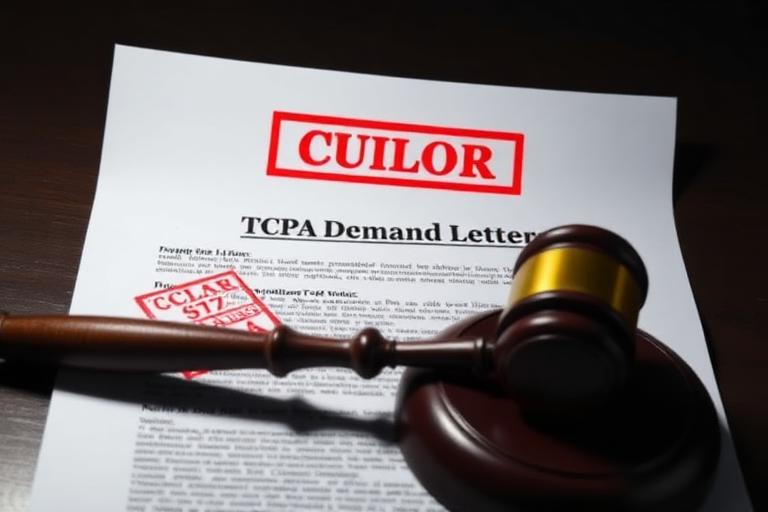
You open your email on a Tuesday and there it is — a letter from a plaintiff's attorney, four pages long, citing 47 U.S.C. § 227, and demanding $1,500 per call across a list of 47 phone numbers they claim you called without consent. That's $70,500 in statutory damages before they file anything. This is what a TCPA demand letter looks like, and what you do in the next 72 hours matters enormously.
What a TCPA Demand Letter Actually Is
A demand letter is a pre-litigation communication — the plaintiff's attorney laying out their theory of the case and giving you an opportunity to settle before they file a class action complaint. It is not a lawsuit. But it is the starting gun.
Most TCPA demand letters are sent by plaintiff's law firms that operate specifically in this space. They run systematic campaigns: registering cell phone numbers, waiting for calls from businesses using autodialers without consent, documenting each call, and identifying which ones can be scaled into class actions. This is a business model for them.
The letter will typically contain: the number(s) called, approximate dates and times, the statutory violations alleged, a settlement demand, and a deadline — usually 14–30 days.
The First 72 Hours: What to Do Right Now
1. Stop the campaign immediately. If the letter references a specific calling campaign, pause it now — before you've consulted a lawyer. Calling even one more of those numbers after receiving the letter transforms a possible negligent violation into a documented willful one. The damages triple at $1,500/call for willful violations.[1]
2. Do not respond directly. Do not email the plaintiff's attorney. Do not call them. Do not send a cease-and-desist counter-letter on your own. Every communication you make without counsel becomes part of the record.
3. Engage a TCPA defense attorney today, not next week. TCPA defense is a specific subspecialty. A general business attorney without TCPA experience will cost you more in the long run.
4. Pull and preserve all relevant records. Call logs for the numbers listed. Scrub records showing when those numbers were last checked against the DNC registry. Consent documentation. The version of your lead list at the time the calls were made. Do not delete or alter anything.
5. Assess the consent position. For every number listed in the letter, answer: do you have a documented consent record that names your company and meets FCC standards? If yes, you have a defense. If no, you're evaluating settlement math.
The Settlement Math: When It Makes Sense
TCPA demand letters are often fishing expeditions. Plaintiff's attorneys send them to hundreds of businesses and settle quickly with the ones that don't have solid defenses. Here's how they think about it:
- Class action potential: If your campaign reached thousands of people with the same allegedly defective consent, the damages scale dramatically. A 10,000-call campaign at $500/call is $5 million in exposure.
- Willfulness risk: If you've received a previous TCPA complaint, been through a prior settlement, or had legal counsel advise you on compliance, courts are more likely to find willfulness. At $1,500/call, the math changes completely.
- Defense strength: If you have documented, specific consent records for every number in the letter — ideally with timestamps, IP addresses, and form version history — the plaintiff's case weakens significantly.
In United States v. Dish Network (2017), Dish paid $341 million after a court found willful violations across over 100 million illegal calls.[2] They had been warned by regulators years earlier. The willfulness finding was based in part on evidence that they continued the same conduct after receiving complaints.
How to Build a Defense Before the Letter Arrives
Here's what every demand letter that results in zero payout has in common: documented consent, documented scrubbing, and documented training — all timestamped and retrievable in under an hour.
- Maintain a consent database: every mobile number you dial should have a consent record you can pull up by phone number within minutes. Include timestamp, IP address, form URL, and form version.
- Run and log DNC scrubs every 31 days: The scrub date is your shield. A timestamped third-party scrub report showing the number was clean at the time of the call is a factual defense.
- Maintain an internal DNC list with dated entries: If someone asked you not to call and you honored it, that's documented evidence of a functioning compliance program.
- Keep written compliance policies and training records. The FTC's safe harbor (16 C.F.R. § 310.4(b)(3)(iii)) requires written procedures and documented training. Without them, the safe harbor doesn't apply.[3]
THE CHEAPEST COMPLIANCE INVESTMENT AVAILABLE:
Before your next campaign, run your lead list through Clean Leads 365's free scan. You get back a timestamped, third-party verification of every number's DNC status, mobile/landline type, and active status. That report is your exhibit A if a demand letter ever arrives. First 100 records free.
Use our free TCPA Fine Calculator to see your exact exposure — calculate your liability in seconds based on call volume and violation type.
References
- 47 U.S.C. § 227(b)(3). TCPA treble damages for willful or knowing violations.
- United States v. Dish Network LLC, No. 3:09-cv-03073 (C.D. Ill. 2017). $341 million judgment.
- 16 C.F.R. § 310.4(b)(3)(iii). Telemarketing Sales Rule safe harbor: written procedures and training required.