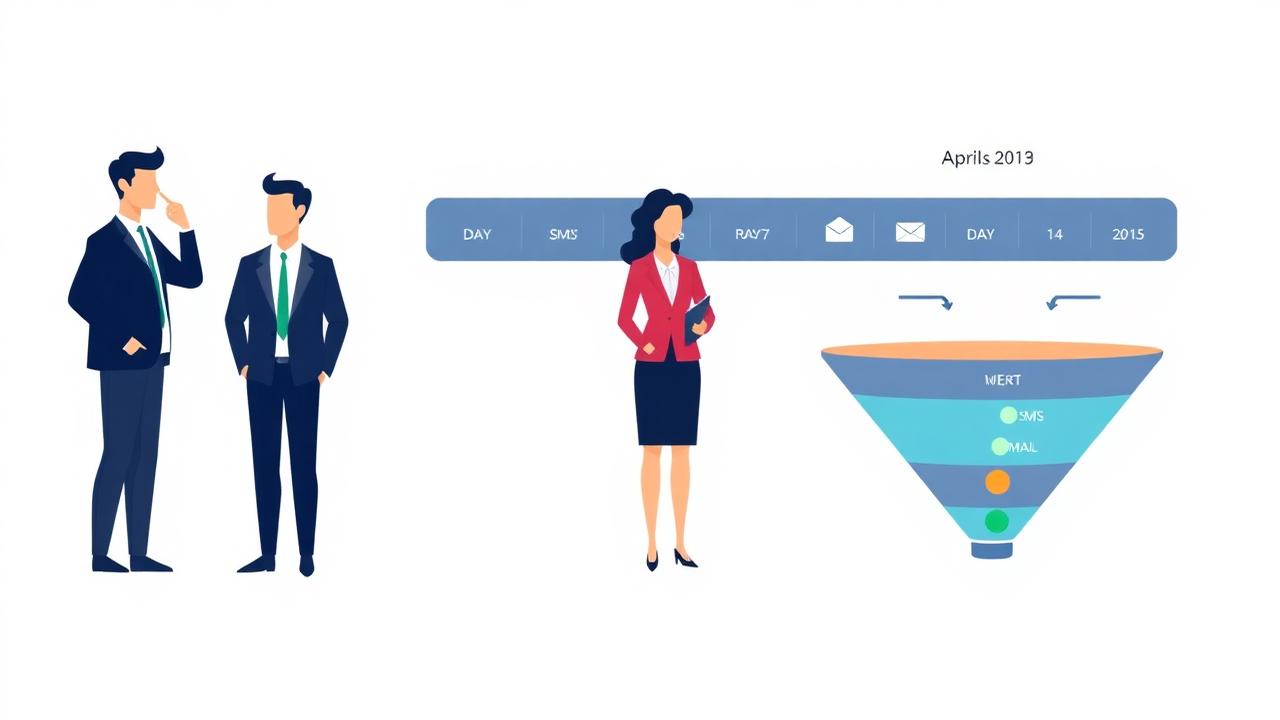


There's a consistent gap between when most insurance agents stop calling a lead and when most conversions actually happen. Velocify's lead response research shows 50% of conversions require at least 5 contact attempts.[1] InsideSales.com found that agents making 6+ attempts convert at 70% higher rates than those stopping at 1–2.[2] The agents hitting 2–3 attempts and marking records dead are exiting the campaign right before the majority of their potential revenue shows up.
Why 8 Attempts
Eight attempts is the floor at which you can reasonably conclude a prospect is genuinely unreachable rather than simply unavailable. Someone may miss seven calls due to travel, illness, work schedule changes, time zone mismatches, or simple bad timing. Eight properly spaced attempts across different days and times eliminates most of those explanations. What remains is either an undeliverable number or someone who has decided not to engage.
The Full Sequence
Attempt 1 — Day 1, Morning: Call + Voicemail
If no answer, leave a voicemail: "Hi [Name], this is [Agent] calling about Medicare options in [County] — I had a quick question for you. I'll try back, but if you want to reach me first, [number]." Short, locally relevant, creates curiosity without delivering the pitch. Expected callback rate: 5–8%.
Attempt 2 — Day 1, Afternoon: Call Only
Same day, different time — at least 3 hours later. No voicemail. Back-to-back voicemails in one day feel like harassment. Catches a different availability window without projecting urgency.
Attempt 3 — Day 3, Morning: Call + SMS
If no answer, send an SMS: "Hi [Name], this is [Agent] — tried to reach you about Medicare options in [County]. Reply STOP to opt out anytime, or call [number] to connect." STOP opt-out language is legally required and operationally useful — prospects who opt out via SMS give you clean signal for suppression.
Attempt 4 — Day 5, Afternoon: Call + Voicemail
Different voicemail than Attempt 1. Add a time element: "Hi [Name], [Agent] again — open enrollment is coming up and I wanted to make sure you had a chance to look at your options before the window closes. Worth a 5-minute call. [number]."
Attempt 5 — Day 7, Morning: Call Only
No voicemail. Pure attempt. You are statistically in the zone where 50%+ of eventual conversions from this list are still reachable. If you connect: "I've been trying to reach you — good to finally catch you. I had a quick question about your current coverage."
Attempt 6 — Day 10, Afternoon: Call + SMS
Second SMS: "[Name] — still trying to connect about your Medicare coverage options before enrollment. Quick question when you have a minute. [number] or reply here." Keep under 160 characters.
Attempt 7 — Day 14, Morning: Call + Voicemail
Third and final voicemail. Shift to a more human tone: "Hi [Name], I've tried to reach you a few times about your Medicare coverage. I just wanted to make sure there wasn't anything confusing about your current plan. If you ever want to talk, I'm here. [number]." This is the voicemail that generates late callbacks — it sounds less transactional than the first two.
Attempt 8 — Day 18–21, Afternoon: Call Only
Final attempt. No voicemail unless they ask. If no answer: status to Dead, re-engagement date set 90 days out. Log as "Exhausted — 8 attempts, no engagement." Creates the documentation trail and queues the record for re-verification in the next relevant enrollment window.
Timing Guidelines
BEST CONTACT WINDOWS:
- Morning slot: 10:00 AM – 12:00 PM prospect local time
- Afternoon slot: 2:00 PM – 4:30 PM prospect local time
- Best days: Wednesday and Thursday across all insurance verticals
- Avoid: Monday morning, Friday afternoon, before 9 AM or after 8 PM local
References
- Velocify. (2012). Optimal Lead Response. Attempt count and conversion rate correlation data.
- InsideSales.com / Xant. (2014). Lead Response Management Study. 6+ attempts vs. 1–2 attempts conversion comparison.
- Federal Communications Commission. (2003). TCPA Rules. 47 C.F.R. 64.1200(d)(3). DNC request honor period: 30 days.