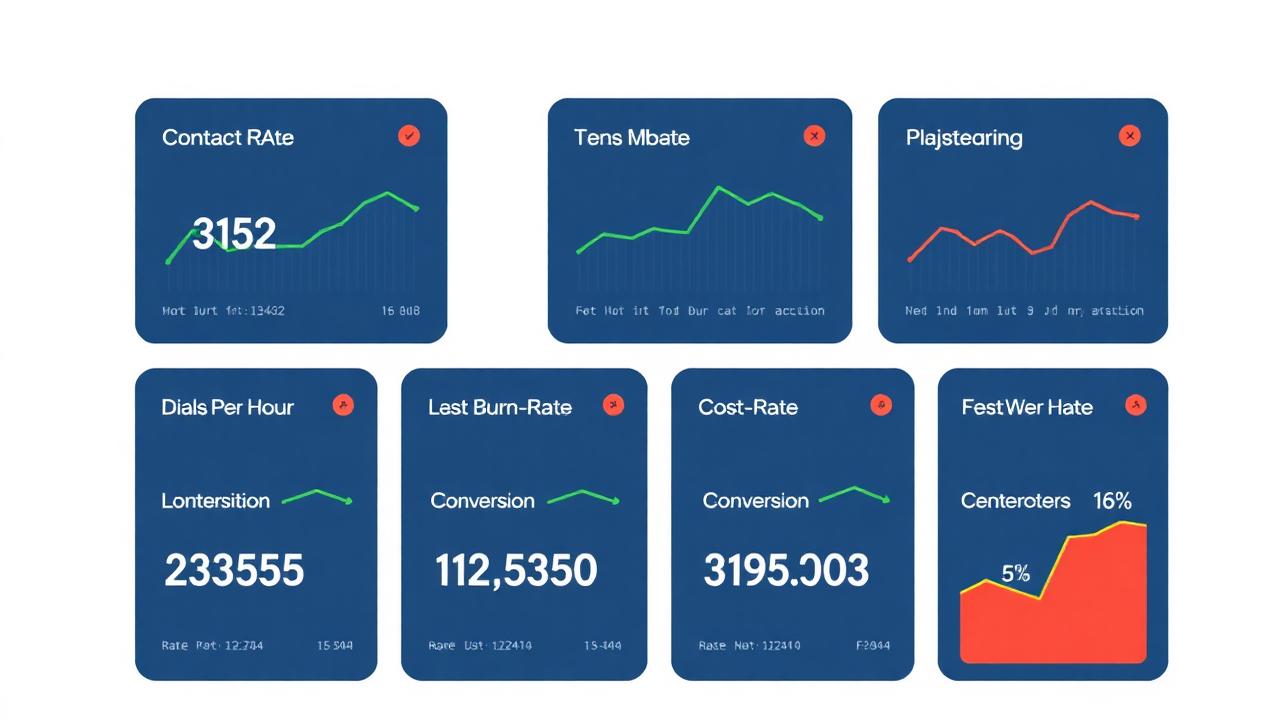


Most insurance agents track two numbers: dials made and policies sold. The first is an activity metric. The second is an outcome metric. What's missing is everything in between — and that middle is where the actual problem lives when results disappoint. There are three conversion points between a dial and a policy, and each one can independently break your campaign. Knowing which one is off is the difference between fixing the issue in a week and trying random changes for months.
Conversion Point 1: Dials to Live Conversations (Contact Rate)
Formula: Live conversations ÷ Dials made × 100 = Contact Rate %
Measures whether your list is working. Low contact rate = inactive numbers, wrong demographics, market saturation, or caller ID flagged as spam.
Benchmark: 35–50% on a verified mobile-first list. Below 25%: data quality or caller ID problem. Below 15%: something seriously wrong.
Conversion Point 2: Live Conversations to Quotes (Quote Rate)
Formula: Quotes presented ÷ Live conversations × 100 = Quote Rate %
Measures whether your opener and qualification are working. Low quote rate = connecting but losing prospects before the product presentation. Either demographic mismatch or opener failure.
Benchmark: 20–35%. Below 15%: opener failing or demographic filter off. Below 10%: revisit both list segmentation and first 30 seconds of script.
Conversion Point 3: Quotes to Closed Policies (Close Rate)
Formula: Policies written ÷ Quotes presented × 100 = Close Rate %
Measures whether your presentation and objection handling are working. Low close rate = right conversation, wrong execution. Usually script, carrier/product fit, or follow-up.
Benchmark: 18–30%. Below 12%: revisit presentation and objection handling. Above 35%: you're very selective or your data is exceptional.
The Diagnostic Tree
WHICH METRIC IS OFF?
- Contact Rate low → LIST or CALLER ID problem. Check: active status, DNC scrub date, caller ID reputation, time-of-day windows.
- Quote Rate low → OPENER or DEMOGRAPHIC problem. Check: age/income filter alignment, first 30 seconds of script, product-demographic fit.
- Close Rate low → PRESENTATION or FOLLOW-UP problem. Check: quote-to-callback rate, objection handling, carrier premium competitiveness.
Two Additional Metrics Worth Tracking
Cost Per Live Conversation
Total campaign cost divided by live conversations. More useful than cost-per-lead because it measures what you paid for each real conversation. A $0.03/record unverified list at 15% contact rate costs $0.20/live conversation. A $0.08/record verified list at 42% contact rate costs $0.19/live conversation. The verified list is cheaper per conversation despite costing more per record.
Revenue Per Dial Hour
(Policies written × average commission) ÷ total dial hours. Captures true campaign productivity in dollars per hour of agent time. An agent generating $85/dial-hour on a clean list vs. $22/dial-hour on a dirty one isn't a better salesperson — they have better data. This metric makes the data quality ROI argument irrefutable.
References
- LIMRA. (2023). Insurance Sales Benchmarking Study. Contact rate, quote rate, and close rate norms by product vertical.
- InsideSales.com / Xant. (2014). Inside Sales Metrics and Compensation Study.
- Salesforce. (2023). State of Sales Report. Metric tracking and performance correlation.