
Two agents. Same list. Same script. Same dialer. Agent A calls between 9 and 11 AM every day. Agent B calls between 4 and 6 PM every day. At the end of the month, Agent B has had 40% more live conversations — not because of anything they said differently, but because of when they were saying it.
Timing is the most underused variable in insurance sales, and the research on it is surprisingly specific.
The Best Days to Call Insurance Leads
Multiple studies on outbound B2C lead contact rates, including the InsideSales.com Lead Response Management Study, point to the same conclusion: Wednesday and Thursday are the highest-contact days for outbound calling.[1]
- Best days (in order): Wednesday, Thursday, Tuesday
- Avoid: Monday before 11 AM, Friday after 2 PM
- Weekends: Practically, response rates are low enough that the compliance exposure doesn't justify the attempt
The Best Times of Day — by Vertical
Medicare and Final Expense (65+ Demographic)
This demographic has the most predictable daily rhythm. Best windows: 10 AM–12 PM and 2 PM–4 PM local time. Early afternoon after lunch is historically the strongest window — they're available, not rushed, and more receptive to a conversation about something that matters to them.
Avoid: After 7 PM (many wind down earlier) and before 9 AM.
Term Life and Working Adults (30–55 Demographic)
Most unpredictable schedule. Best windows: 7–8 AM (before work), 12–1 PM (lunch), 5:30–7:30 PM (post-work). These windows are shorter and more competitive — your opener needs to be tighter and get to the point faster.[2]
ACA / Health Insurance (Under-65 Marketplace)
The broadest demographic. Mid-morning (10–11:30 AM) and late afternoon (4:30–6 PM) are generally strongest. The after-work window matters more here than for the senior demographic.
The Time Zone Problem That Kills Contact Rate
If your call center is Eastern and your list includes California numbers, an 8 AM EST start means you're calling California at 5 AM Pacific. Not only is this a TCPA violation — nobody is answering at 5 AM.[3]
Practical scheduling for multi-time-zone campaigns: Start Eastern numbers first at 8 AM EST. Add Central at 8 AM CST (9 AM your time). Add Mountain at 8 AM MST (10 AM your time). Add Pacific at 8 AM PST (11 AM your time).
Building Your Weekly Dial Calendar
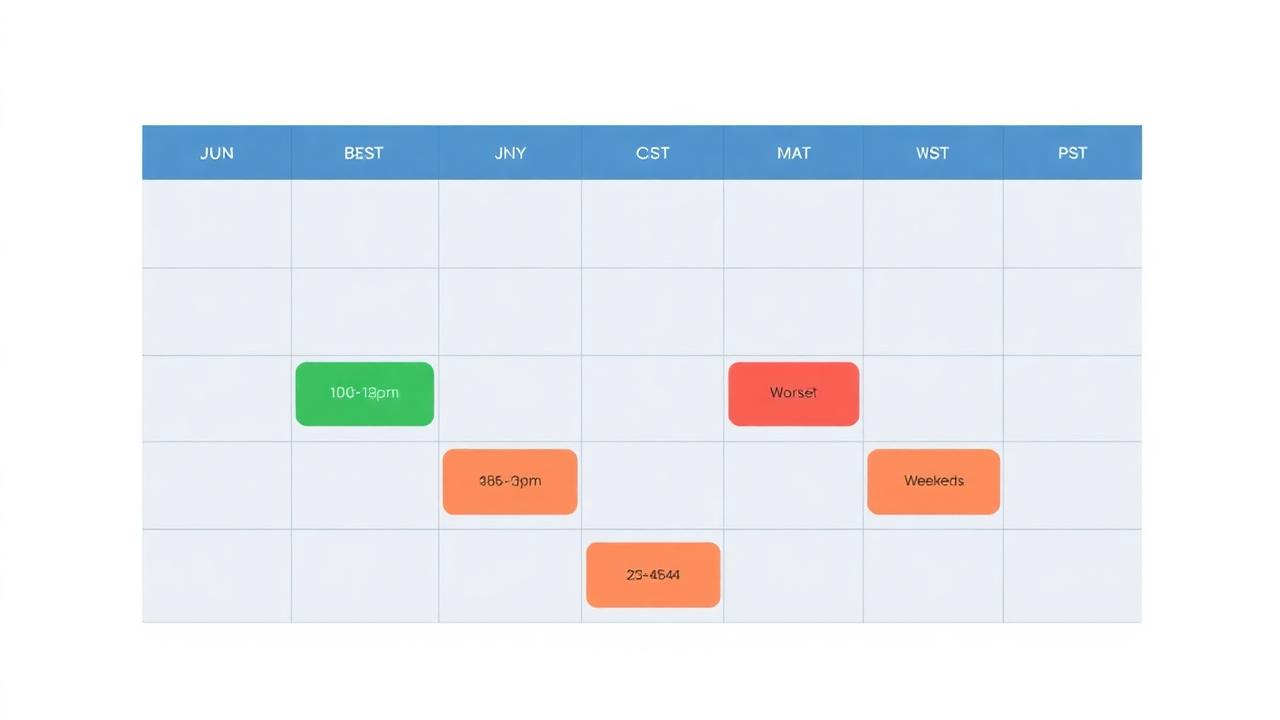
For a Medicare/final expense operation in the Eastern time zone working a national list:
- Monday: 9:30 AM–12 PM ET (Eastern + Central) | 2 PM–4:30 PM ET (Mountain + Pacific)
- Tuesday: 10 AM–12 PM ET (all zones) | 2 PM–5 PM ET (all zones)
- Wednesday: 10 AM–12 PM ET (PRIORITY — peak day) | 2 PM–6 PM ET (PRIORITY — peak window)
- Thursday: 10 AM–12 PM ET (PRIORITY — peak day) | 2 PM–6 PM ET (PRIORITY — peak window)
- Friday: 10 AM–1 PM ET only (contact rate drops after 2 PM)
The Attempt Distribution Matters Too
Don't use your best calling windows for first attempts only. Your peak windows — Wednesday/Thursday 4–6 PM — should include a meaningful portion of re-attempts on records from earlier in the week. The prospect who didn't answer your Tuesday morning call may be free Wednesday afternoon.
Treat your weekly dial calendar as a pipeline flow: first attempts on Monday/Tuesday mornings, re-attempts concentrated in peak Wednesday/Thursday windows, final attempts on Friday morning.
Before any of these timing optimizations matter, your list needs to be clean. Upload your list to cleanleads365.com/scan-my-list — first 100 records free. And check live TCPA calling hours for your state →
References
- InsideSales.com / Xant. (2014). Best Times to Call Research. Analysis of 3.5 million outbound sales calls.
- CallHippo. (2022). Best Time to Make Sales Calls: Study of 140 million calls.
- 47 U.S.C. § 227(c)(1). TCPA calling hour restriction: 8am–9pm in called party's local time zone.