
The conventional assumption in insurance outbound sales is that urban and suburban markets are preferable. This assumption misses something the data consistently shows: rural prospects answer the phone at higher rates, maintain lower caller ID spam flag accumulation, and convert at contact-to-close rates that frequently exceed urban market performance.
Why Rural Markets Convert Better
Higher Answer Rates
Rural mobile phone users have significantly lower average daily call volume than urban users. The result: a rural prospect receiving an unfamiliar outbound call is less habituated to ignoring unknown numbers. Contact rates on rural-filtered lists consistently run 5–12 percentage points higher than equivalent urban lists in the same state.
Lower Caller ID Saturation
Urban and suburban area codes have been worked by insurance agents, debt collectors, political campaigns, and robocallers at higher volume than rural area codes. Rural area codes accumulate spam flags more slowly, meaning your outbound number retains its clean caller ID status longer when working rural lists.
Lower Agent Competition
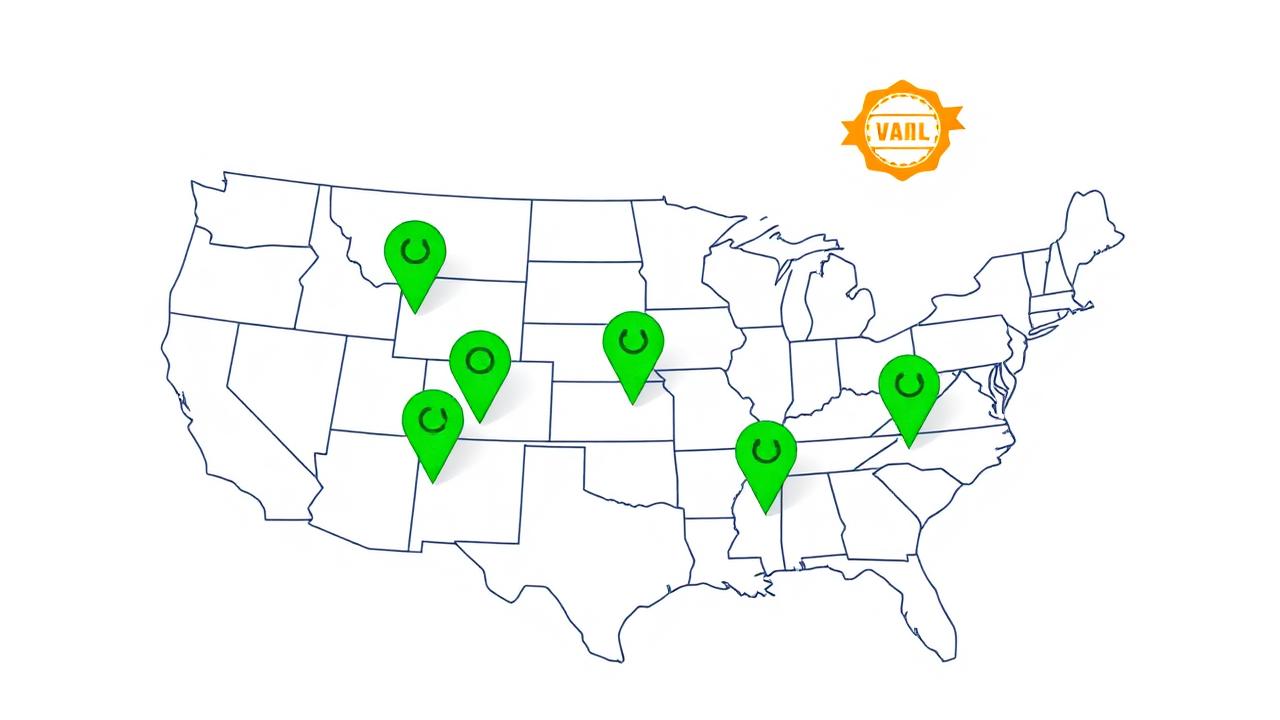
Most outbound insurance operations concentrate on high-population states and metro areas. Rural areas — particularly rural segments of states like Kentucky, West Virginia, Mississippi, Arkansas, and the Dakotas — receive dramatically less insurance outbound volume per eligible prospect. A rural Medicare prospect may have received two or three insurance calls in the past year versus fifteen or twenty in a Miami or Phoenix suburb.
Different but Manageable Objection Patterns
Rural prospects express insurance skepticism differently:
- "I don't trust insurance companies" — more common and deeply held in rural demographics
- "I already have coverage through employer/spouse" — rural areas have more employer-sponsored group health in agricultural, mining, and manufacturing sectors
- "I need to talk to someone local" — trust in local relationships is stronger in rural communities
How to Filter for Rural Lists
Rural filtering uses CBSA (Core Based Statistical Area) classification or county-level rural designation:
- Exclude major MSA (Metropolitan Statistical Area) counties — the top 50–100 metro areas
- Include micropolitan areas (small cities of 10,000–49,999) — better infrastructure and income demographics than the most rural counties
- Top rural-performing states for Medicare outbound: Kentucky, Tennessee, West Virginia, Mississippi, Alabama, Arkansas, Missouri, and the Dakotas
Browse rural-filtered inventory at cleanleads365.com/cleaner.
Income and Product Considerations for Rural Markets
Rural Medicare demographics skew toward lower income than urban markets — the sweet spot for Medicare Advantage zero-premium plans rather than Medigap. However, rural markets have a specific Medigap opportunity: the rural farmer and small business owner demographic at income $40K–$70K, ages 65–72, who have been self-funding healthcare for decades and place high value on predictable coverage costs.
References
- USDA Economic Research Service. (2023). Rural Classifications. CBSA and micropolitan area definitions.
- LIMRA. (2023). Insurance Distribution Geographic Analysis. Urban vs. rural contact rate and conversion data.