

Most insurance agents are leaving voicemails wrong. Either they leave one on every unanswered call — which reads as harassment by call four — or they leave nothing at all, giving the prospect no reason to call back, or they leave a message so generic it could be from any of the twelve agents calling the same demographic that week.
Voicemail in insurance sales is a distinct channel with its own rules, not a consolation prize for a missed connection. Done right, it produces callbacks from prospects who have already pre-qualified themselves. Done wrong, it burns caller ID reputation and generates DNC requests.
The Core Principle: Curiosity Over Information
The goal of an insurance voicemail is not to deliver your pitch. If it sounds like a presentation, the prospect has all the information they need to decide not to call back. The goal is to create enough specific curiosity that calling back feels worth 5 minutes.
The formula: specific context + one unstated fact + a non-pressured callback. Not: "I'm calling about Medicare Supplement options in your area." Instead: "I was working with folks in [County] this week and came across two plans that hadn't raised premiums for 2026 — wanted to make sure you'd heard about them. No rush, just [number] when you get a chance."
The Three-Voicemail System
Voicemail 1 — Attempt 1: The Quick Question
"Hi [Name], this is [Agent] calling — I'm a Medicare broker working with people in [County] this month. Had a quick question for you — nothing urgent. If you get a chance, [number], or I'll try back."
"Had a quick question" is the smallest possible information gap — the most powerful callback trigger. Expected callback rate: 5–8%.
Voicemail 2 — Attempt 4: The Specific Hook
"Hi [Name], [Agent] again — I've been trying to catch you. There's a change coming up with Medicare plans in [State] for 2026 and I wanted to make sure you'd had a chance to review your options before the window closes. Worth 5 minutes. [number]."
Length: under 30 seconds. Adds a specific time-bound reason. Expected callback rate: 4–6%.
Voicemail 3 — Attempt 7: The Human Note
"Hi [Name], this is [Agent]. I've tried a few times to reach you about your Medicare coverage — I'm not going to keep calling, I just wanted to make sure if you ever have questions about your options there's someone you can call who isn't going to push you into anything. [number]. I'm around."
Length: under 25 seconds. Explicitly defuses sales pressure. Signals this is the last call — which either prompts a fence-sitter to respond or creates a clean close to the sequence. Expected callback rate: 6–10%, often the highest of the three because it sounds most human.
Frequency Rules
VOICEMAIL FREQUENCY LIMITS:
- Maximum 3 voicemails per prospect across the full 8-attempt sequence
- Minimum 3 no-voicemail attempts between each voicemail
- Never leave back-to-back voicemails on the same day
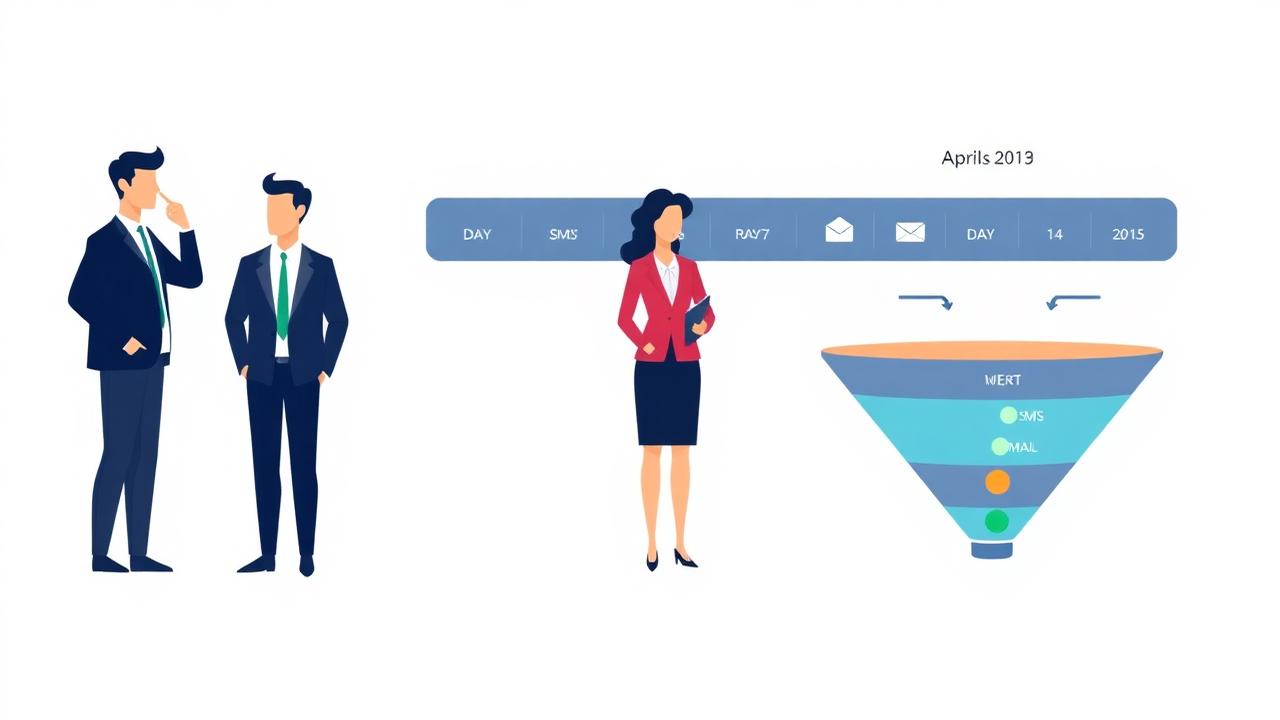
- Spread voicemails across Days 1, 5, and 14 minimum
What Not to Do
- Don't mention the premium or coverage amount — you've given them all the info they need to decide without calling back
- Don't say "I have great news" — a known robocall opener pattern, triggers immediate deletion
- Don't use the word "important" — overused by scammers and collectors for years, triggers hostility
- Don't leave a voicemail under 10 seconds — too short reads as robocall. Target 18–28 seconds for all three
References
- InsideSales.com / Xant. (2019). Anatomy of a Cold Call. 3.5 million call dataset. Voicemail callback rates by message type.
- Katz v. Liberty Power Corp., No. 18-cv-10506 (D. Mass. 2020). Ringless voicemail TCPA liability.