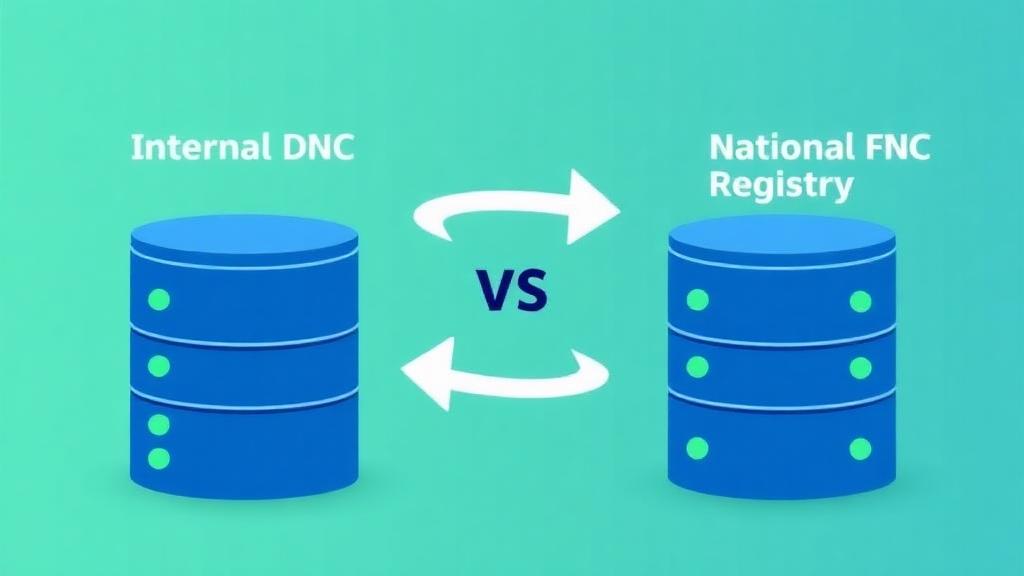


The National DNC Registry protects you from calling numbers consumers have voluntarily registered. Your internal DNC list protects you from something legally more serious: calling someone who has directly told you to stop. Under FTC Telemarketing Sales Rule, ignoring a verbal DNC request creates willful violation status — which can push per-call damages from $500 to $1,500.[1] A well-documented internal DNC list is also your most important evidence if you're ever the target of a TCPA complaint.
What the Law Requires
TSR rules require maintaining a company-specific DNC list and honoring requests within 30 days of receipt. In practice, the standard should be same-day — the 30-day window is a legal grace period, not an operational target. Retention requirement: 5 years from the date of the DNC request.[2] Suppression lists must live in a system that won't be accidentally deleted during campaign cleanup.
The Four Triggers for an Internal DNC Entry
- Verbal request during a live call: "Don't call me again," "Take me off your list," "I'm not interested, please remove my number."
- Written request: Email, text reply, or letter. Automatically timestamped — cleaner documentation than verbal.
- Carrier-level blocking: Some dialers report this as a specific call outcome. Flag these records for suppression.
- SMS STOP reply: Under TCPA, SMS opt-outs must be honored within 10 business days.[3] Your platform should auto-suppress immediately.
The Five Fields You Need
- Phone Number — Normalized format (digits only, no dashes) for reliable matching against future lead lists
- Date of Request — The date the request was received, not when you entered it. For live calls, this is the call date
- Request Type — Verbal, SMS Opt-Out, Written, or Carrier Block
- Agent Who Received Request — For multi-agent operations: who took the call
- Source Campaign — Which campaign was active when the request came in. Useful for identifying lists with elevated DNC rates
Using the List in Practice
Pre-Campaign Suppression Match
Before every campaign, run your new lead list against your internal DNC. This is separate from national registry scrubbing — a number may not be on the national registry but may be on your internal list from a prior campaign. Export your internal DNC to CSV, compare phone number columns against the new lead list, remove matches before loading the dialer. Clean Leads 365 flags national DNC registry hits. Your internal DNC list is your responsibility — it appears in no external database. Running both checks is the complete suppression workflow.
Same-Day Entry
When an agent receives a verbal DNC request: the entry goes in before the end of business day. Not at end of week. Not when they think of it. Same day. In a multi-agent operation every agent needs direct access to add entries — the compliance responsibility can't bottleneck through a manager who might enter it tomorrow.
DOCUMENTATION NOTE:
If you face a TCPA complaint, the first thing a plaintiff's attorney requests is your internal DNC list with dated entries. A well-maintained list with consistent same-day entries is your primary evidence of a compliant operation. An absent or poorly maintained list is evidence of the opposite.
References
- Federal Trade Commission. (2003). TSR. 16 C.F.R. 310.4(b)(1)(iii). Internal DNC list requirements and 30-day honor period.
- Federal Trade Commission. (2003). TSR. 16 C.F.R. 310.5(a)(3). Record retention: 5 years.
- CTIA. (2019). Short Code Monitoring Handbook. SMS STOP honor requirements: 10 business days.