Most insurance agents know about the National Do Not Call Registry. Far fewer know that over a dozen states run their own separate Do Not Call lists — with their own registration databases, their own exemption rules, and their own enforcement mechanisms. Assuming federal compliance covers everything is one of the most expensive mistakes an outbound calling operation can make.
Two Separate Legal Frameworks
The National Do Not Call Registry was established under the Do-Not-Call Implementation Act of 2003 and is administered by the FTC under the Telemarketing Sales Rule (16 C.F.R. Part 310). It is a federal law with federal penalties (up to $51,744 per violation).
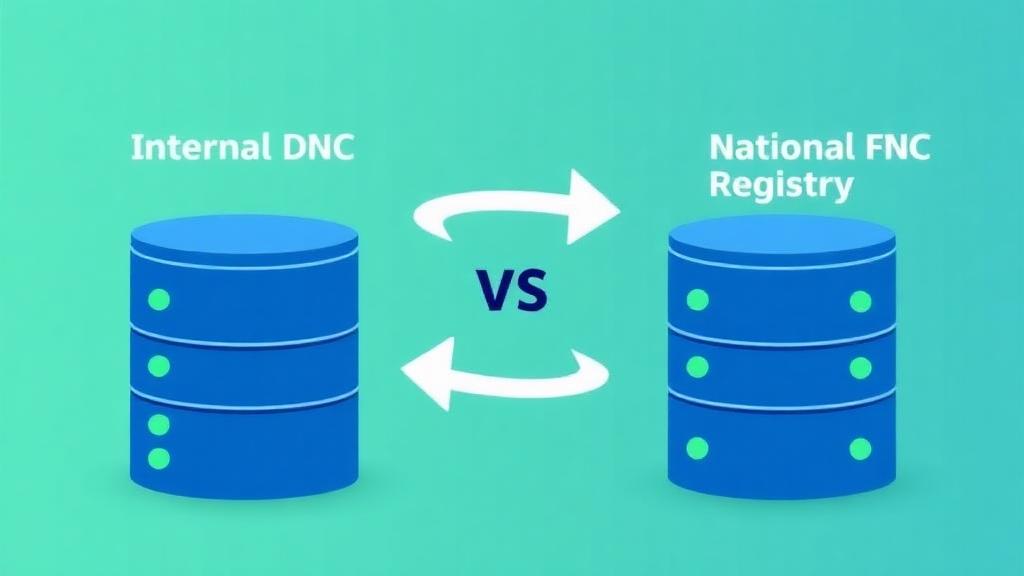
State DNC laws exist independently, under state consumer protection statutes. Under the National Do Not Call Registry Act, states may impose requirements more restrictive than the federal standard but cannot be less restrictive.
In practical terms: federal compliance is the floor. Some states have raised it significantly.
States With Their Own DNC Lists
Florida
Florida's No Solicitation Law (Fla. Stat. § 501.059) predates the federal registry and imposes additional restrictions. Florida maintains a separate registration database — a number on the national list may not be on the Florida list and vice versa.
Indiana
Indiana's Telephone Solicitation of Consumers Act (Ind. Code § 24-4.7) created a state DNC registry that operates in parallel with the federal list. Indiana has specific rules for insurance telemarketing and explicitly covers calls made from outside the state to Indiana residents.
Texas
Texas has its own no-call rules administered by the Texas Public Utility Commission. The Texas No-Call list adds an additional layer for Texas residents and carries separate civil penalties under Texas law.
Other States
Alabama, Colorado, Georgia, Idaho, Louisiana, Mississippi, Missouri, Montana, North Carolina, North Dakota, Oklahoma, Oregon, Pennsylvania, South Carolina, Tennessee, Wisconsin, and Wyoming all have state-level telemarketing statutes that either maintain separate lists or impose rules beyond federal minimums.
Where State Rules Are Often Stricter Than Federal
Calling Hours
The federal rule prohibits calls before 8:00 a.m. or after 9:00 p.m. in the called party's time zone. Some states narrow this window further.
Exemptions
The federal EBR exemption allows calls within 18 months of a transaction or 3 months of an inquiry. Some states do not recognize this exemption at all, or apply a shorter window.
Insurance-Specific Restrictions
Several states have promulgated insurance-specific telemarketing rules through their state insurance commissioner offices, governing script disclosure requirements, licensing status during calls, and recorded announcements.
"You are not calling 'the country.' You are calling a person in a specific state, and that state's laws govern what you're allowed to do."
The Multi-State Compliance Problem
For insurance agents working across multiple states — a common reality for Medicare brokers licensed in 10+ states — the compliance matrix gets complex quickly. A campaign that is fully compliant at the federal level and in 45 states may have a systematic violation in the 5 states where additional rules apply.
How to Build a Multi-State Compliant Process
- Know which states you're dialing into: Pull your list by state before any campaign.
- Check federal AND applicable state lists: For every state with a separate DNC program, your scrubbing process must include that state's list.
- Check current state law: State DNC programs change. Verify the current status for any high-volume state you dial at least quarterly.
- Document the state-level scrub: Your compliance documentation should specify which lists were checked and on what date.
Clean Leads 365 scrubs against both national and state DNC lists →